For Carrie Ferreira, becoming a teacher has been a goal more than a decade in the making.
Ferreira has spent about 13 years working as a paraprofessional at East Brookfield Elementary School. Paraprofessionals assist teachers and support students in the classroom, typically earning around $35,000 a year in Massachusetts.
After earning her associate degree at Quinsigamond Community College, she looked for a way to continue her education and become an early childhood teacher, but she struggled to find a program that fit her goals and her life.
Then she found Worcester State’s paraprofessional program.
Now in her final year, Ferreira is preparing to complete her student teaching and apply for her teaching license.
“It’s been a really good experience,” Ferreira said. “There’s a lot that you do know, but you’re also learning new things, too.”

Carrie Ferreira, pictured center.
Ferreira is one of a growing number of paraprofessionals who are working toward bachelor’s degrees and full teaching licensure through Worcester State. For these adult learners, the path to becoming a teacher can be challenging: They are balancing college with full-time work, family responsibilities and the demands of working in local schools.
Financial barriers can make that path even harder.
A new $1 million gift to The Mary Cotter-Lemoine Teacher Education Support Fund for Adult Learners is helping address that challenge, providing more reliable financial support to paraprofessionals pursuing degrees and teaching licenses.
Established in 2022, the fund has already supported three cohorts of students in Worcester State’s Paraprofessional Educator to Bachelor’s Program. The expanded gift will provide more reliable support for students balancing college with full-time work, family responsibilities and the demands of working in local schools. The gift also serves to anchor Believe in Beyond [1], the university’s new $30 million fundraising campaign.
The financial challenge facing students in the program can be significant. Students entering with an associate degree must complete an additional 51 undergraduate credits, with the path to graduation and full licensure taking a minimum of roughly two and a half years. Required undergraduate courses cost between $1,000 and $1,500 each, while paraprofessionals earn approximately $30,000 annually.
“One of the big challenges that really holds paraprofessionals back from getting a degree is the cost,” said Sue Foo, chair of the Department of Education at Worcester State. “When we can pay for some aspect of their education, it kind of opens up a lot of opportunity for them to say, ‘This is something that they can do.’”
For some students, that financial support has already made the difference between continuing their education and putting their plans on hold.
Calli McLaughlin, a paraprofessional for three and a half years, was working two jobs when a roughly $1,000 hold on her account prevented her from registering for classes. After learning about the Cotter-Lemoine Paraprofessional Support Fund, she was able to continue her studies.
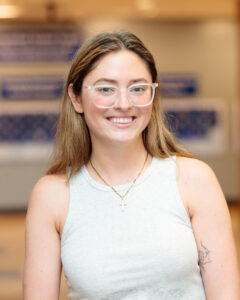
Calli McLaughlin
“It was a lifesaver,” she said.
McLaughlin is studying early education and hopes to become a kindergarten teacher.
Lorena Acevedo, who works in special education at Worcester’s Clark Street School, also knows what it means to worry that the cost of college could derail her plans. A mother of two who works full time, Acevedo had taken out a loan to pay for her education before learning she could receive assistance through the fund. When she discovered that the fund would cover all of her tuition, she was overwhelmed with relief.
“I just started crying a lot,” Acevedo said. “I was so grateful because I thought, ‘I won’t be able to take classes.’”
Acevedo hopes her bachelor’s degree will allow her to have her own classroom. But for her, becoming a teacher is about more than advancing her career. It is also about showing her children what is possible.
“I’m able to show my children that no matter what age you are, you can still succeed in school at the end of the day,” she said.
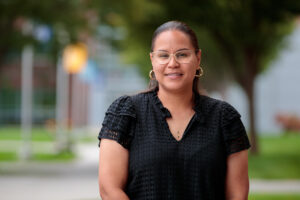
Lorena Acevedo
The impact of the program extends into schools across Worcester County, where qualified and experienced teachers are in high demand. Participants are already working in schools throughout Worcester and surrounding communities, bringing years of classroom experience with them as they work toward becoming licensed educators.
Foo hopes the expanded funding will allow Worcester State to reach more paraprofessionals in the region, including those who may not yet qualify for state financial assistance.
“We want people to know that there is an opportunity to get your degree and your license,” Foo said. “The opportunity comes first — and we have the opportunity because we have the funding.”
For Ferreira, McLaughlin, Acevedo and their classmates, the gift is helping make that opportunity possible — allowing them to continue their education, advance their careers and ultimately lead their own classrooms.