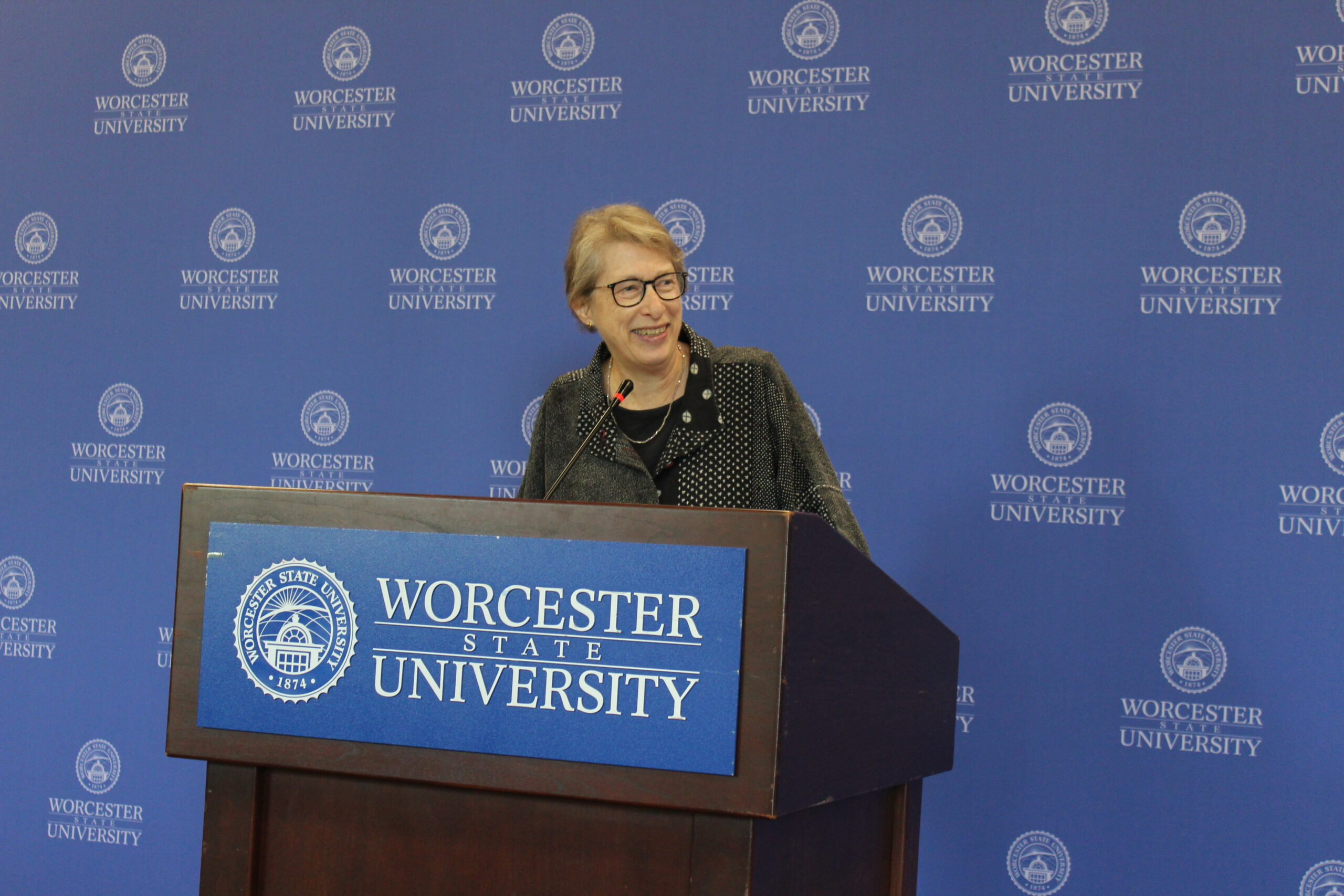
From transcendentalist salons to Worcester’s own Hope Cemetery, Megan Marshall’s lifetime of historical sleuthing has repeatedly led back to Worcester. Visiting Worcester State University as the campus kicked off its Homecoming celebration, the Pulitzer Prize-winning biographer returned to those local roots, accepting an honorary doctorate and urging the audience to rethink how we define heroism in American life.
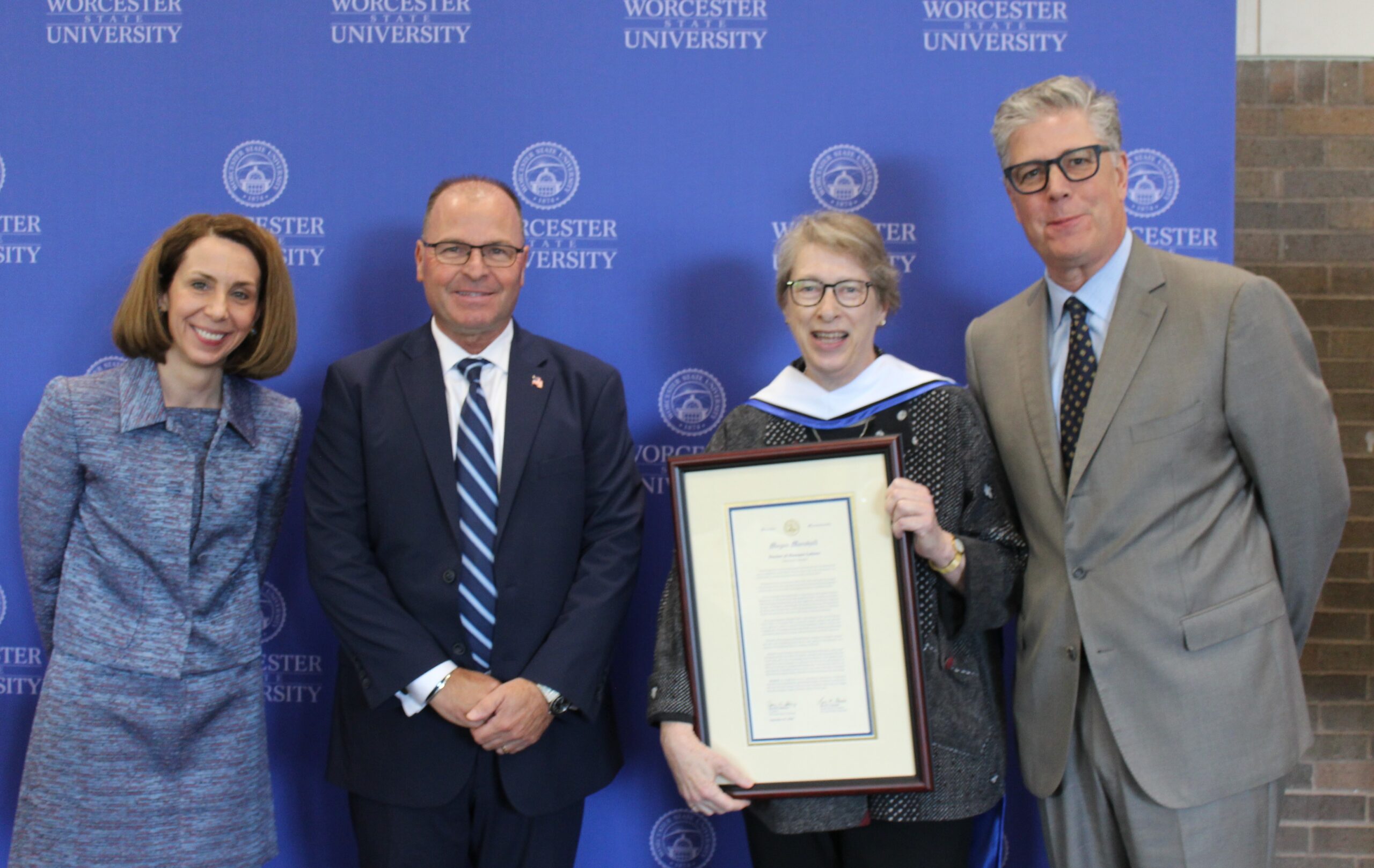
Before delivering her talk, titled “Why We Need Hero(ines) and the Power of Biography,” Marshall received the university’s highest honor: an honorary Doctor of Humane Letters degree conferred by Board of Trustees Vice Chair Dr. Lawrence Sasso. Marshall, who serves as the Charles Wesley Emerson College Professor Emerita at Emerson College, accepted the doctorate with warm humor.
“Curiously, I have no advanced degree,” Marshall told the audience. “This is my first doctorate, and it’s very, very meaningful to me after having been something of a pretender all this time. As a professor, everyone assumes I’m Dr. Marshall, but now I am finally.”
Dr. Heather Treseler, professor of English at Worcester State, introduced Marshall and praised her transformative impact on historical scholarship.
“Professor Marshall’s innovative, deeply researched accounts of women’s lives have changed the ways in which we practice history, enlivening the hidden hardships and heartaches, as well as the achievements and successes of several important American women,” Treseler said. “She places their lives firmly in the historical record and in our cultural imagination. Her study of the past is one that allows us to imagine our present and our future with more understanding and more hope.”
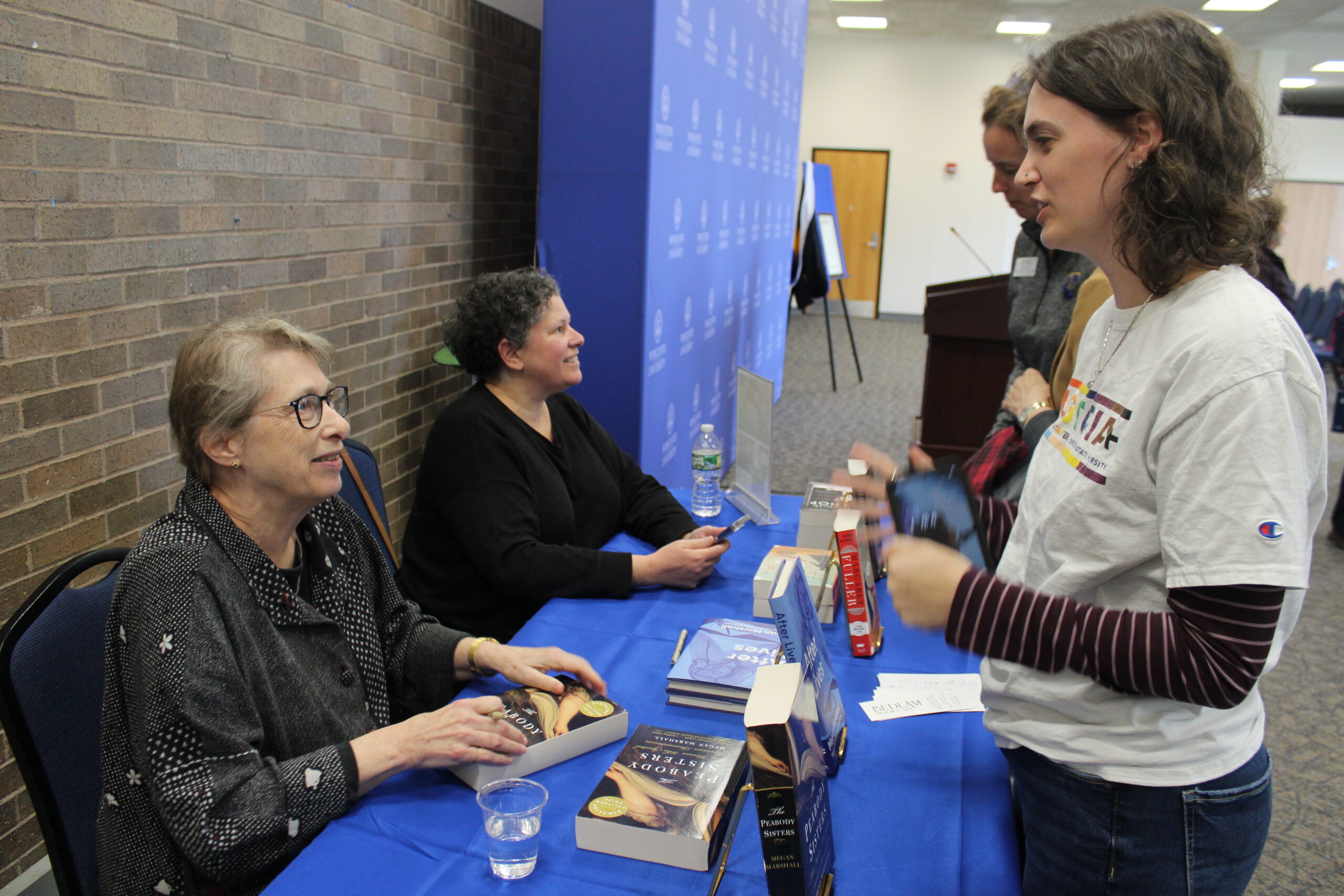
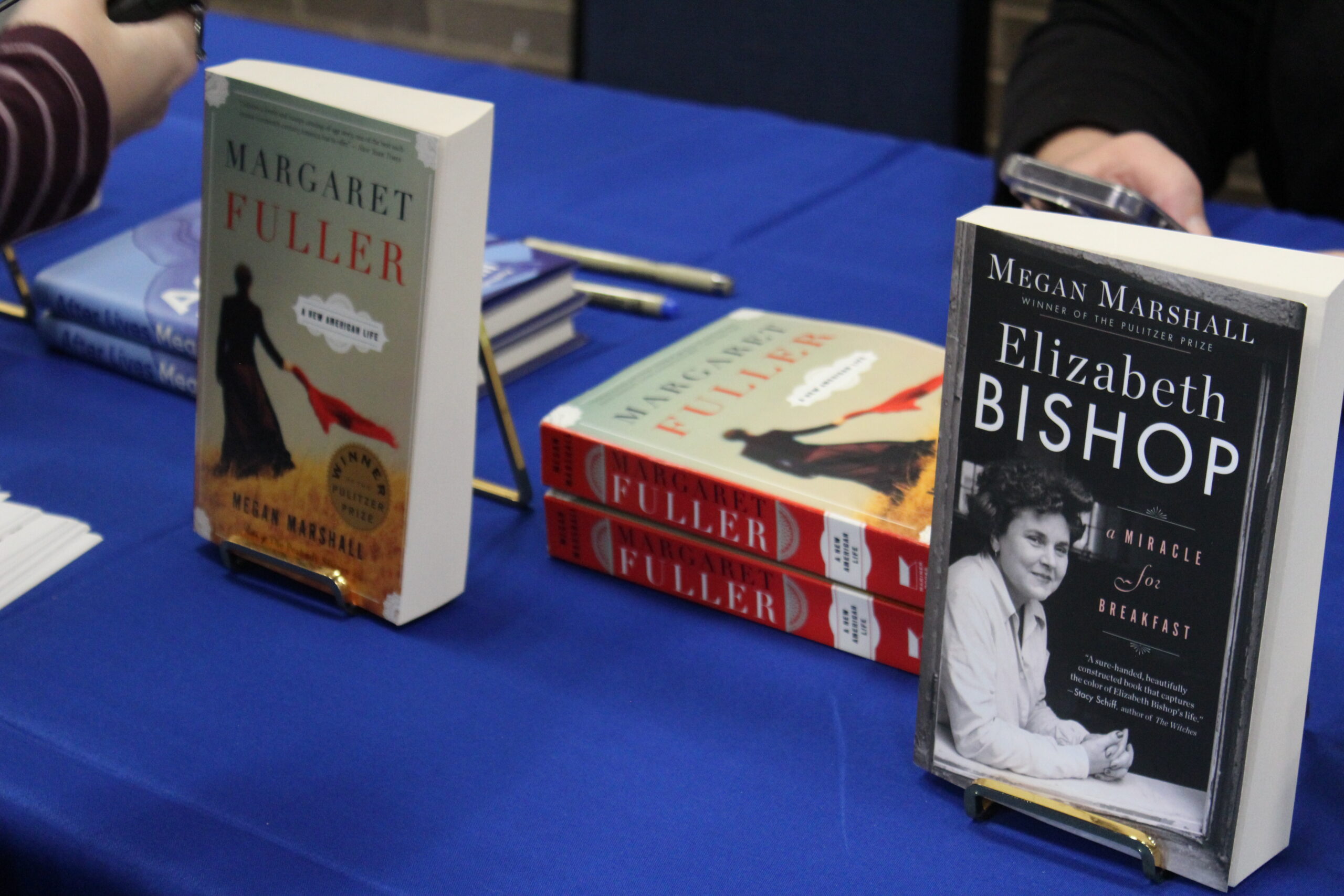
Marshall’s acclaimed trilogy of biographies focuses on prominent New England figures: The Peabody Sisters: Three Women Who Ignited American Romanticism; Margaret Fuller: A New American Life, which won the 2014 Pulitzer Prize in Biography; and Elizabeth Bishop: A Miracle for Breakfast, which examined the Worcester-born poet through both archival research and Marshall’s own memories of studying under Bishop at Harvard.
During her address, Marshall reflected on her decades-long practice of uncovering history through the lives of others, distinguishing her approach from traditional “Founding Fathers” histories. Drawing on concepts from historian Jane Kamensky, Marshall advocated for a third category of life writing: the “famous-adjacent.”
These narratives focus on individuals – frequently women – who were central players in their own eras and interacted with iconic figures, yet whose distinct contributions were ultimately eclipsed by time.
“Women, who for centuries faced significant restrictions on their freedom to act publicly, are often found among the famous-adjacent,” Marshall explained. “Such lives give us all the advantages of a famous person’s biography… and they help us imagine the everydayness of a past era. They present experiences we can learn from and model our lives on.”
Marshall pointed out that male-dominated records historically focused on public events, whereas women’s letters and journals captured essential emotional dimensions.
“Writing women’s lives enabled me to explore the ordinary, yet no less exemplary courage I was always looking for,” Marshall said, linking this “everyday heroism” to the struggles faced by people navigating career obstacles, personal tragedy, and educational pursuits against steep odds.
Tracing local history, Marshall detailed how Elizabeth Palmer Peabody – a key subject of her first book – championed progressive educational techniques like active discussion as early as 1822, long before such methods were widely adopted. She also highlighted Peabody’s role in encouraging reform leader Horace Mann, whose pioneering efforts led to the establishment of teachers’ colleges, then known as normal schools, in the 1830s – institutions that Worcester State University proudly traces its roots back to today.
Turning to the subject of loss, resilience, and art, Marshall read Elizabeth Bishop’s celebrated villanelle, One Art, paying tribute to the poet’s roots in Worcester, where Bishop experienced early childhood tragedy before channeling her experiences into literature.
Concluding her talk with a nod to the transformational power of education, Marshall urged Worcester State students and faculty to recognize the heroism within their own lives and pursue continuous learning beyond academic credentials. Quoting author W.G. Sebald’s observation that “the dead are outside time,” Marshall emphasized that biography serves as a vital bridge between generations.
“The people of the past are outside time and can travel into ours through their examples,” Marshall said. “They speak to us. We just have to exercise our historical imaginations to hear them.”