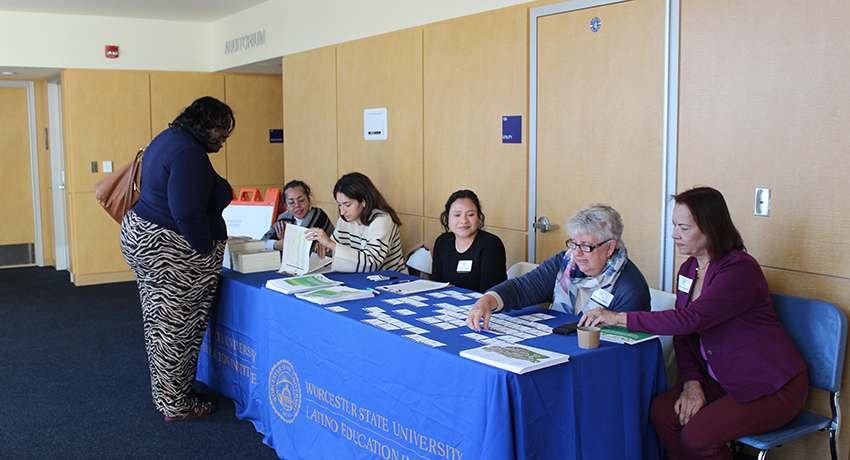
A symposium held at Worcester State University brought together educators, policymakers, parents, and community members to engage in dialogue and strategize on how to strengthen efforts to support Latino students in Massachusetts.
The symposium, held on October 17, was titled “Meeting the Moment: Protecting Education Pathways for Latino Students in Massachusetts” and aimed to amplify the educational experiences of Latino students, families, and communities and build community to protect pathways to education.
Melissa Colón, the moderator, provided an overview of the event’s major themes, including the growth and diversity of the Latino student population, the intense racial and economic segregation in many school districts, and ongoing advocacy and community responses.
Colón emphasized the symposium’s goal of “amplifying the educational experiences of Latino students, families, and communities in this moment in time” and “building community” to protect pathways to education.
Worcester State President Barry Maloney welcomed attendees and highlighted the university’s commitment to Latino student success and the work of the Latino Education Institute. Maloney noted that Worcester State’s undergraduate student body is now 25% Latino, and the university is on the cusp of becoming federally recognized as a Hispanic-Serving Institution.
Maloney said the university has a long history of serving diverse students. He noted that Worcester State was founded as the Worcester Normal School, with the purpose of educating future teachers to work with diverse, multicultural student populations in the public school system.
“In 1874, we were founded with a purpose to educate those who could teach multicultural, multinational children entering the recently established public school system,” he said.
Keynote speaker Viviana Abreu-Hernández, president of the Massachusetts Budget and Policy Center, maintained that federal and state budget and policy decisions are deliberately undermining education and social programs that serve low-income and minority communities as part of a broader effort at “nation-building” that excludes and marginalizes certain groups.
Abreu-Hernández said that in Massachusetts, the impact will include 200,000 residents losing healthcare coverage and 11,000 children losing access to Head Start programs.
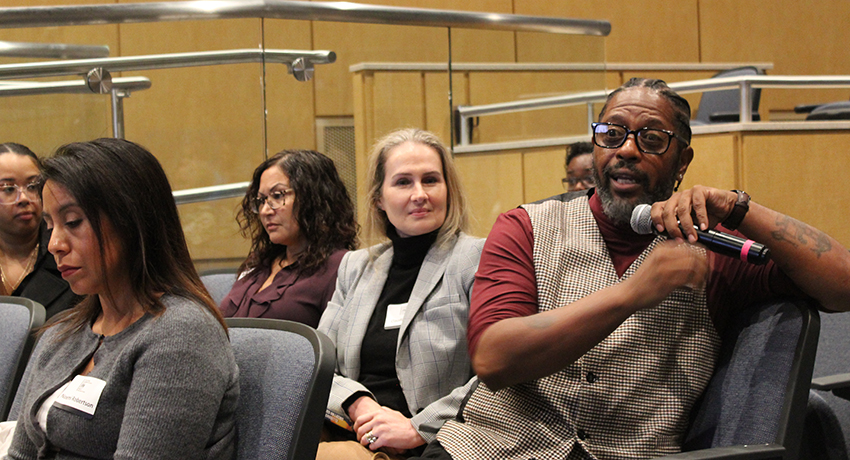
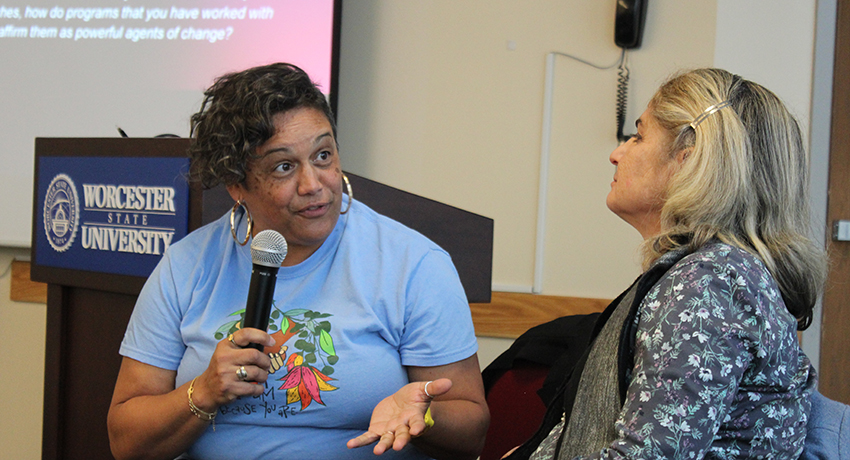
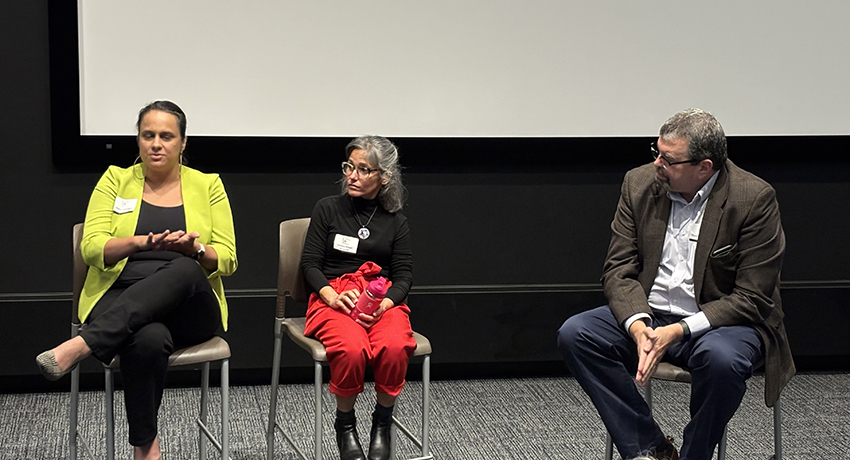
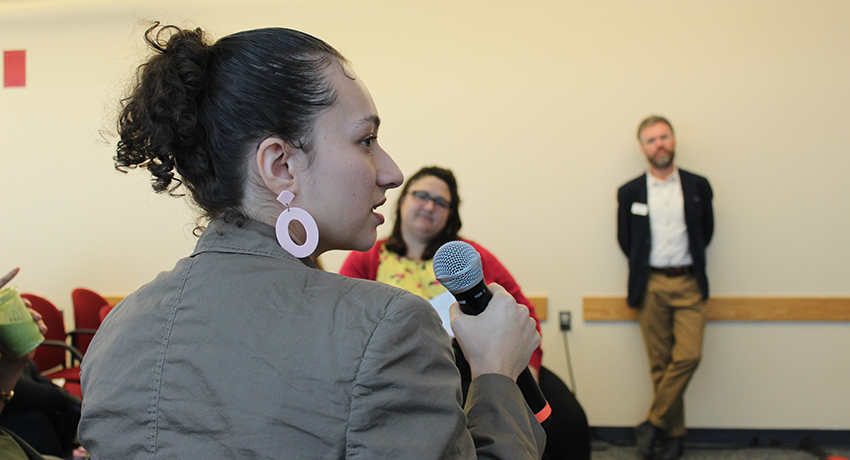
A question-and-answer session followed the opening forum, with participants sharing their reactions, questions, and concerns about the challenges facing Latino students and communities, and strategies for addressing these issues.
Maria Juncos-Gautier, executive director of the Latino Education Institute (LEI) at Worcester State, emphasized the need to understand the “machinery” behind the policy changes rather than focusing on individual political figures.
Kendra Patterson of the Massachusetts Budget and Policy Center discussed efforts to build a “budget curriculum” to educate communities on using the budget process to drive change. Several symposium participants expressed a determination to continue fighting for the educational rights and opportunities of Latino students in Massachusetts.
Four breakout sessions followed the morning plenary session: “Centering Youth Voices: Leadership and Action,” moderated by Timothy Murphy, professor of Urban Studies at Worcester State; “Policy and Practice: Federal and State Actions Shaping Families’ and Children’s Lives,” moderated by Thomas Conroy, chair of Urban Studies at Worcester State; “Safeguarding Educations Pathways: From PK-12 to Higher Education,” moderated by Carmen Veloria, associate vice president for academic affairs at Central Connecticut State University; and “Navigating a New Landscape: Supporting Els (English learners) After Federal Divestment,” moderated by Fabián Torres Ardila, associate director of the Gáston Institute for Latino Community Development and Public Policy at UMass Boston.
At the Centering Youth Voices panel, community organizers and youth advocates came together to share stories of how they are uplifting youth voices and transforming their communities. Panelists were Juncos-Gautier; Alexandra Oliver-Dávila, director of Sociedad Latina in Boston; and Patricia Krugger Henney, associate professor of Urban Education, Leadership, and Policy Studies at UMass Boston.
The discussion highlighted the work of organizations such as Worcester State’s LEI and Sociedad Latina, which are dedicated to developing the next generation of youth leaders. Through programs like these, young people gain critical skills in areas like workforce development, arts and culture, and civic engagement, panelists said. A key initiative is the use of Youth Participatory Action Research, or YPAR, a research method in which young people work with adults to identify issues in their communities, learn research methods, and present their findings to policymakers and the public.
As the panelists made clear, youth-led participatory research is not just an academic exercise—it is a powerful tool for collective action and community transformation. By centering the experiences and perspectives of young people, they said, organizations can cultivate a new generation of engaged, empowered leaders who are poised to tackle the challenges of today and tomorrow.